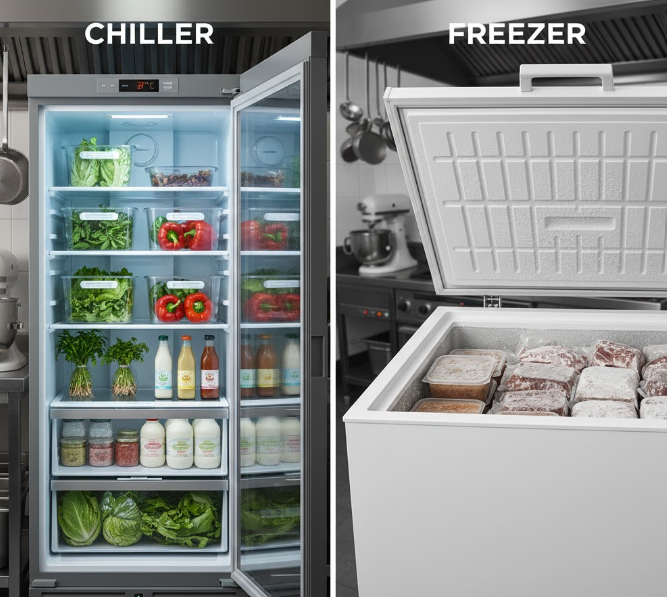
I’ve handled more kitchen equipment than I care to admit, and I’ve learned that choosing between a chiller vs freezer can confuse even seasoned cooks. Both machines cool food, yet each one behaves in its own stubborn way. So, let me talk you through it in a looser, more conversational style – almost like we’re chatting across a prep table in your kitchen.
What Sets a Freezer Apart From a Chiller
A freezer pushes food into solid form by bringing temperatures far below zero. A chiller, on the other hand, keeps items pleasantly cold without turning them into blocks of ice. This simple gap in temperature leads to entirely different outcomes for taste and texture.
- A freezer holds items for long stretches of time
- A chiller keeps things bright and fresh for near-term use
- A freezer slows spoilage more forcefully
I’ve ruined more herbs than I’d like by tossing them into the freezer out of laziness, so trust me – each machine deserves a role of its own.
Understanding Chiller vs Freezer Temperature
A chiller usually sits in the 0°C to 4°C zone. That’s a friendly place for vegetables, drinks, dairy, and anything you plan to reach for often. A freezer aims for – 18°C or lower, which stops bacteria as if hitting a giant pause button on life.
A chiller keeps your food flexible and flavorful. A freezer preserves large batches for weeks or months. Think of a chiller as the helpful assistant and the freezer as the grumpy guardian who keeps things untouched until you absolutely need them.
Blast Chiller vs Freezer: Speed vs Storage
A blast chiller vs freezer comparison feels almost unfair because they serve different needs. A blast chiller drops temperature from piping-hot to safe levels in astonishing time. Chefs lean on it because slow cooling can wreck texture and bring safety headaches. A freezer moves far more slowly; it cares about storage, not speed.
- A blast chiller cools cooked food in minutes
- A freezer works gradually
- A blast chiller protects taste and moisture after cooking
If you’ve ever cooked a large batch of stew and watched it sit around awkwardly while you hoped it would cool, you’ll understand why blast chillers feel magical.
Chiller or Refrigerator: Which One Wins?
A refrigerator handles random groceries without fuss. A chiller holds a tighter temperature range, which helps certain ingredients stay crisp and dependable. Many cafés cling to their chillers because they dislike surprises with dairy or cut produce.
A refrigerator is the catch-all machine. A chiller stays focused. If you’re picky about consistency, the chiller simply behaves better.
Does “Chiller” Mean Fridge or Freezer?
Neither. A chiller lives between the two. It chills more aggressively than a fridge but never crosses into freezing territory. Plenty of people mix them up, which leads to tomatoes turning into tiny red rocks – never a joy to slice.
Choosing Between a Chiller vs Freezer
Think about how long you store food and how quickly you cook through it. A chiller keeps things ready and lively. A freezer preserves things for the future. A blast chiller helps busy kitchens that handle hot food regularly. Once you match your routine to the right machine, everything feels smoother, and your ingredients stay happier too.
