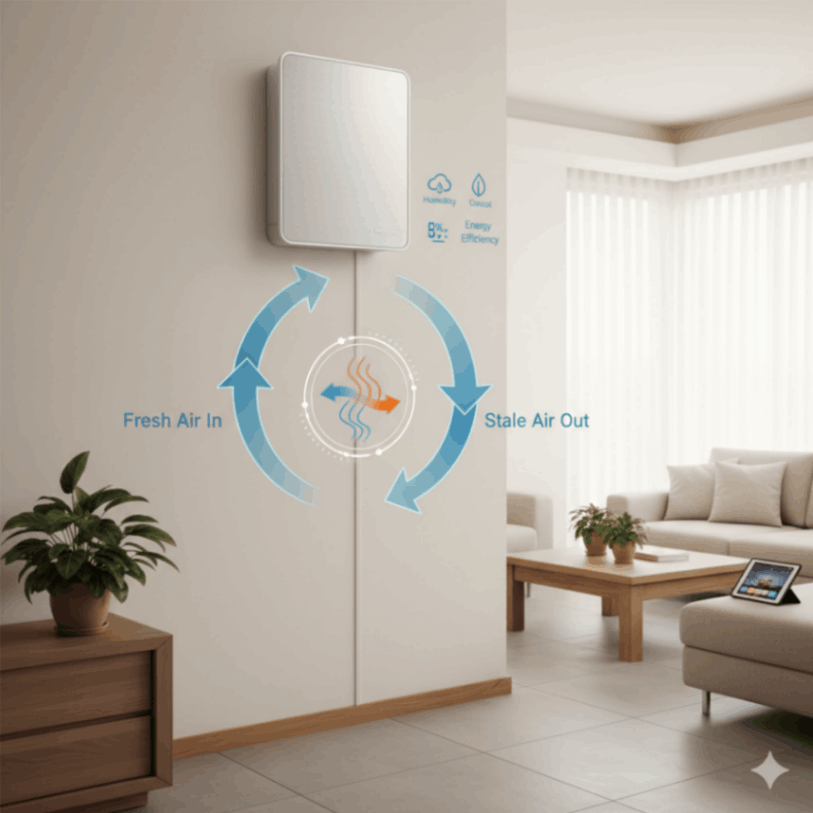
Air quality at home can change faster than you realize, and ignoring it often leads to higher energy bills and a stuffy, uncomfortable living space. Exhaust systems in your kitchen, along with heat recovery air exchangers and mechanical ventilation heat recovery systems, handle this directly, bringing in fresh air while removing stale air without wasting heat.
What a Heat Recovery Ventilator Actually Does
A heat recovery ventilator (HRV) pulls in outdoor air and exchanges it with indoor air; it recycles heat from outgoing air to warm the incoming flow. When summer hits, the process works differently, but the goal remains the same: comfort without throwing energy away.
Some practical perks of HRVs include:
- Cutting down on heating and cooling costs noticeably
- Keeping air moving so indoor spaces feel fresher
- Reducing moisture buildup that can damage walls or floors
Modern HRVs pair well with mechanical heat ventilation recovery setups, meaning older homes can upgrade without a full renovation.
How Energy Recovery Ventilators Stand Out
Energy recovery ventilators (ERVs) handle more than just temperature; they manage humidity too, making them ideal for damp climates or homes prone to condensation. People often call them energy recovery ventilation systems or heat and energy recovery ventilators, but all these devices aim to keep your air comfortable and your energy bills in check.
Why ERVs can be a smart choice:
- Balance indoor humidity to avoid that sticky or dry feeling
- Keep rooms comfortable through heatwaves or cold snaps
- Lighten the load on HVAC systems, saving energy in the long run
Both HRVs and ERVs offer a straightforward way to breathe easier indoors while trimming utility costs.
Advantages of Installing a Heat Recovery Ventilation System
Adding a heat recovery ventilation system keeps air moving continuously without wasting energy. Dust, pollen, and small particles get filtered, which can help households with allergy sufferers or anyone sensitive to air quality.
Other advantages:
- Reduce energy consumption significantly, sometimes up to half
- Maintain more even temperatures across rooms
- Support eco-friendly building practices without breaking the bank
A mechanical ventilation heat recovery setup is not just a gadget; it’s a long-term investment in comfort and energy savings.
Installation and Care Tips
Installing a mechanical heat ventilation recovery system takes some thought: duct placement, vent location, and unit positioning all matter for performance. Maintenance keeps everything running smoothly:
- Clean filters every three to six months
- Check the heat exchanger once a year
- Make sure vents aren’t blocked by furniture or clutter
Regular care ensures your heat recovery air exchangers and energy recovery ventilators keep functioning efficiently for years.
Wrapping It Up
A heat recovery ventilation system or energy recovery ventilation system makes homes healthier, more comfortable, and cheaper to run. HRVs or ERVs both tackle stale air while recycling energy, and installing them is one of the smartest moves for anyone serious about comfort and savings. With heat and energy recovery ventilators, your home gets fresher air without running up your bills or requiring constant fiddling with your heating or cooling systems.
