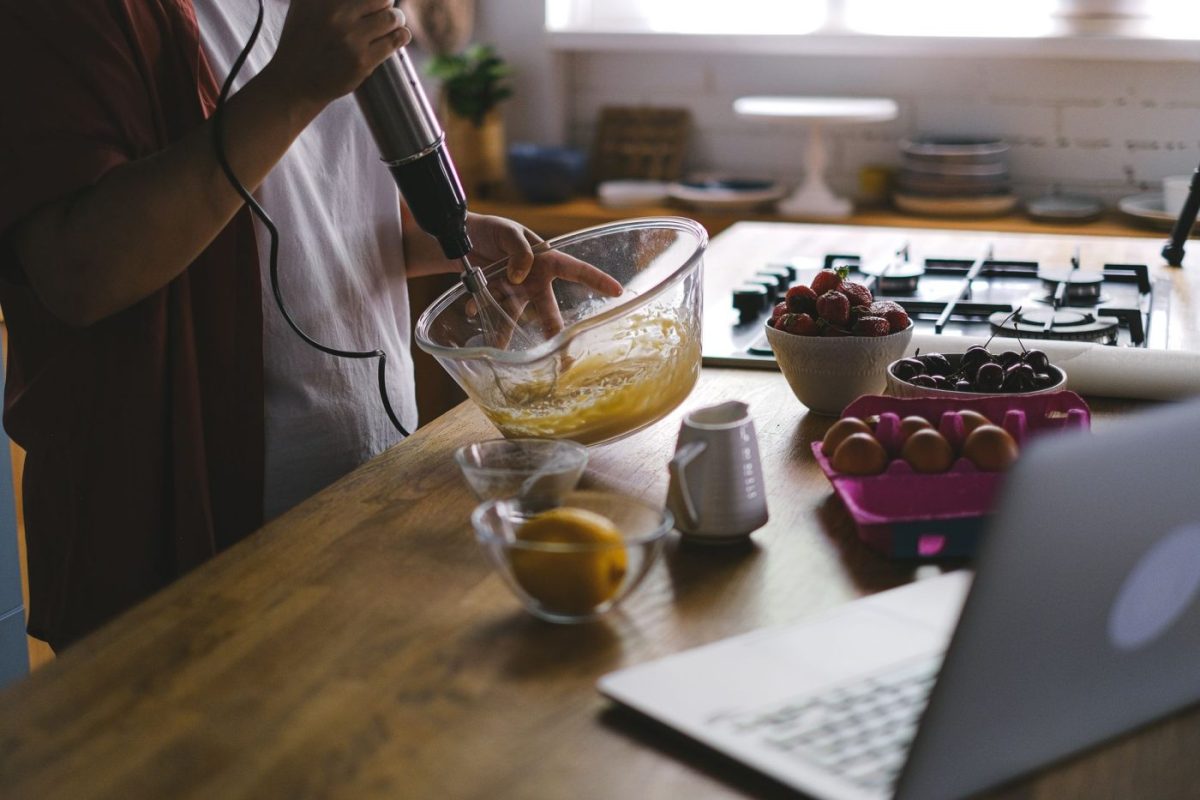
How a spiral mixer differs from a planetary mixer in operation
In a spiral mixer the bowl rotates, while the spiral hook spins on its own fixed axis. As a result, the dough constantly wraps around the hook, stretches and takes in oxygen. A planetary mixer works differently: the bowl stays still, and the attachment travels in a circle along the bowl walls while also spinning on its own axis, much like a planet orbiting. This lets it scrape dough off the walls and move it towards the centre.
The different mechanics give different kneading results. The spiral system stretches the gluten intensively without overheating the dough, which is critical for yeast doughs. The planetary mechanism is better suited to whipping and mixing, and when kneading stiff dough the load on its gearbox rises. At large volumes a spiral mixer is faster: it kneads a batch of yeast dough in 8 to 12 minutes, while a planetary mixer needs 15 to 20 minutes for the same amount.
Which mixer is better for yeast, shortcrust and stiff dough
A spiral mixer is designed specifically for yeast dough with hydration from 55%. The spiral hook rotates on its axis while the bowl turns against it. This combination stretches the gluten gently without tearing it and helps develop a windowpane quickly. A planetary mixer with a dough hook will also knead yeast dough, but more slowly, and its hook pushes the mass in one direction, which gives a less developed structure.
For shortcrust pastry, sponge cakes and muffins, a planetary mixer with a flat beater is ideal. It rubs cold butter into flour evenly and quickly whips sugar with eggs. A spiral machine is not built for these tasks: it has neither the right attachment nor enough speed. Stiff doughs such as dumpling or noodle dough require a lot of force, so a spiral machine with a powerful motor that does not overheat at low speeds works better here.
- Yeast dough (bread, pizza, croissants): a spiral mixer gives fast kneading with a good windowpane and no overheating.
- Shortcrust dough (cookies, tarts): a planetary mixer with a flat beater rubs butter into flour in minutes.
- Sponge and choux batters: only a planetary mixer with a whisk, to incorporate air.
- Stiff dough (dumplings, noodles): a spiral mixer with a heavy-duty gearbox, since a planetary mixer may stall or overheat its motor.
- Baguette and ciabatta dough (hydration above 70%): a spiral mixer with reverse to avoid overheating and retain moisture.
- Whipped cream, meringue, mousse: a planetary mixer with a whisk; a spiral mixer is not designed for this.
Batch volume: how much dough you get per cycle
Actual dough output depends not only on bowl volume but also on the fill ratio. For yeast dough in a planetary mixer, the bowl is filled to no more than 30 to 40% of its volume, otherwise the dough climbs over the rim while kneading. So a 20-litre bowl gives you 6 to 8 kg of dough per cycle.
A spiral mixer allows a fill of up to 60 to 70% for yeast dough thanks to the bowl shape and the path of the spiral. The same 20-litre bowl yields 12 to 14 kg of dough per batch. For stiff dumpling or noodle dough the fill ratio is lower in both types of machine, but the proportion holds: a spiral mixer delivers twice as much product from a bowl of the same nominal size.
In production using 50 kg of flour or more per day, a spiral mixer becomes the only practical choice. A planetary mixer at that volume would require several kneading cycles and constant bowl changes, which eats into the baker's time and does not give consistent batch quality.
Unloading and cleaning: which is easier day to day
A spiral mixer with a removable or tilting bowl takes less physical effort to unload. You lower the bowl, roll it out on its trolley and tip the dough onto the bench in one movement. In larger models the bowl is locked to the frame and lifted hydraulically, so the operator never has to lift a heavy bowl by hand.
A planetary mixer has a removable bowl. After kneading you release the locks, lift off the 10 to 20 kg bowl together with the dough and carry it to the work bench. For small batches this is not a problem, but in serial baking the lift is repeated dozens of times per shift and increases staff fatigue.
Cleaning a spiral model takes longer. The fixed bowl has to be cleaned in place, and the spiral hook and safety guard have complex shapes where dough residue builds up. On a planetary mixer the bowl, whisk, hook or beater come off in seconds and go into a dishwasher or a deep sink. A full sanitation cycle on a planetary model is usually twice as fast. The human factor also favours the planetary mixer: staff clean a simple design without hard-to-reach crevices more thoroughly, which lowers the risk of hygiene violations during inspections.
Price and service life: what pays off for small, medium and large bakeries
A planetary mixer with a cast-iron gear drive and a 1.0 to 1.5 kW motor usually covers all the needs of a small bakery. With a lower purchase price, it lasts 8 to 12 years on wheat and pastry doughs, provided it is not overloaded with stiff batches above its rated capacity. Repairability is high: replacing motor brushes, the belt or the planetary ring gear needs no special tools.
For medium and large bakeries, a spiral mixer recovers the price difference through faster kneading and twice the component life. A twin-arm spiral, V-belt drive and a motor of 2.2 kW or more are built for 15 to 20 years of intensive work with wet yeast dough. Cost of ownership falls because one machine replaces two planetary mixers for the same baking volume. Repairability depends on the manufacturer: models with a separate bowl drive and a flange-mounted motor are quicker to service than monoblock units with an integrated gearbox.
Can one mixer cover all of a bakery's needs
A planetary mixer works like a food processor thanks to its interchangeable attachments. You fit a whisk for egg whites, a beater for mixing creams or a hook for kneading yeast dough. This covers most tasks in a small bakery or pastry shop where the range changes constantly.
A spiral mixer is a specialist. It is designed for intensive kneading of tight, low-hydration dough needed for bread, bagels and pizza. It cannot whip meringue or make choux pastry. In a bakery that produces only bread and buns, a single spiral machine is enough.
You need both machines in these cases:
- Your range includes bread as well as pastries that require whipping and mixing.
- Bread volumes are large, but you regularly need to make small batches of fillings or creams.
- The bakery runs several shifts, and a planetary mixer takes auxiliary tasks off the spiral one.
- You make stiff bagel dough on the spiral mixer and shortcrust or sponge on the planetary one.
What to check in the specifications before buying
Manufacturers list dozens of parameters, but five things matter for daily work. They directly affect the convenience, safety and durability of the machine in your kitchen.
Check these points in the specification before comparing models on price.
- Bowl and hook material. AISI 304 stainless steel means resistance to acidic dough and a long, corrosion-free service life. Cheaper models made of painted steel start to rust where they are scratched within a few months.
- Motor power. For spiral mixers, aim for roughly 1 kW for every 20 to 25 kg of flour in the batch. Less power means the motor overheats on stiff dough and the thermal protection trips prematurely.
- Reverse. A useful feature on planetary machines: rotating the attachment in both directions gives a more even mix without manual intervention. Reverse is less common on spiral mixers, but it also helps bring the dough together faster.
- Safety interlock. The machine must switch off the motor automatically when you lift the safety guard. This is not an extra option but a basic safety requirement for staff.
- Wheels and fixed connection. If a mixer weighs over 100 kg and has no wheels, it cannot be moved to clean the floor. A model on lockable castors lets you roll the machine away without disturbing a hard-wired power connection.
FAQ
Can you knead yeast dough in a planetary mixer?
Yes, with limitations. A planetary mixer suits small batches of wet yeast dough with hydration above 60%. For stiff loaf or bagel dough it usually lacks power, and you risk burning out the gearbox. A spiral mixer handles any yeast dough faster and is gentler on the gluten structure.
What bowl size should a bakery using 100 kg of flour per shift choose?
Size it by a single batch, not by daily consumption. For 100 kg of flour per shift, a spiral mixer with a 50 to 80 litre bowl, giving 30 to 50 kg of dough per cycle, is usually enough. Two or three batches are better than buying one huge machine and running it half empty every time.
Is it true that a spiral mixer heats the dough less?
Yes. In a spiral mixer the bowl turns more slowly and the hook has a larger contact area, so there is less friction and heating. This is critical for yeast dough, which should not exceed 26 to 28 °C after kneading. In a planetary mixer the attachment spins faster and warms the dough noticeably more.
Which is better for a pastry kitchen: spiral or planetary?
A planetary mixer is more practical for a pastry kitchen. It whips egg whites and cream, mixes sponge and shortcrust doughs, and with extra attachments can grind nuts and roll dough. A spiral mixer is only needed in a pastry kitchen for yeast products, if there are many of them.
