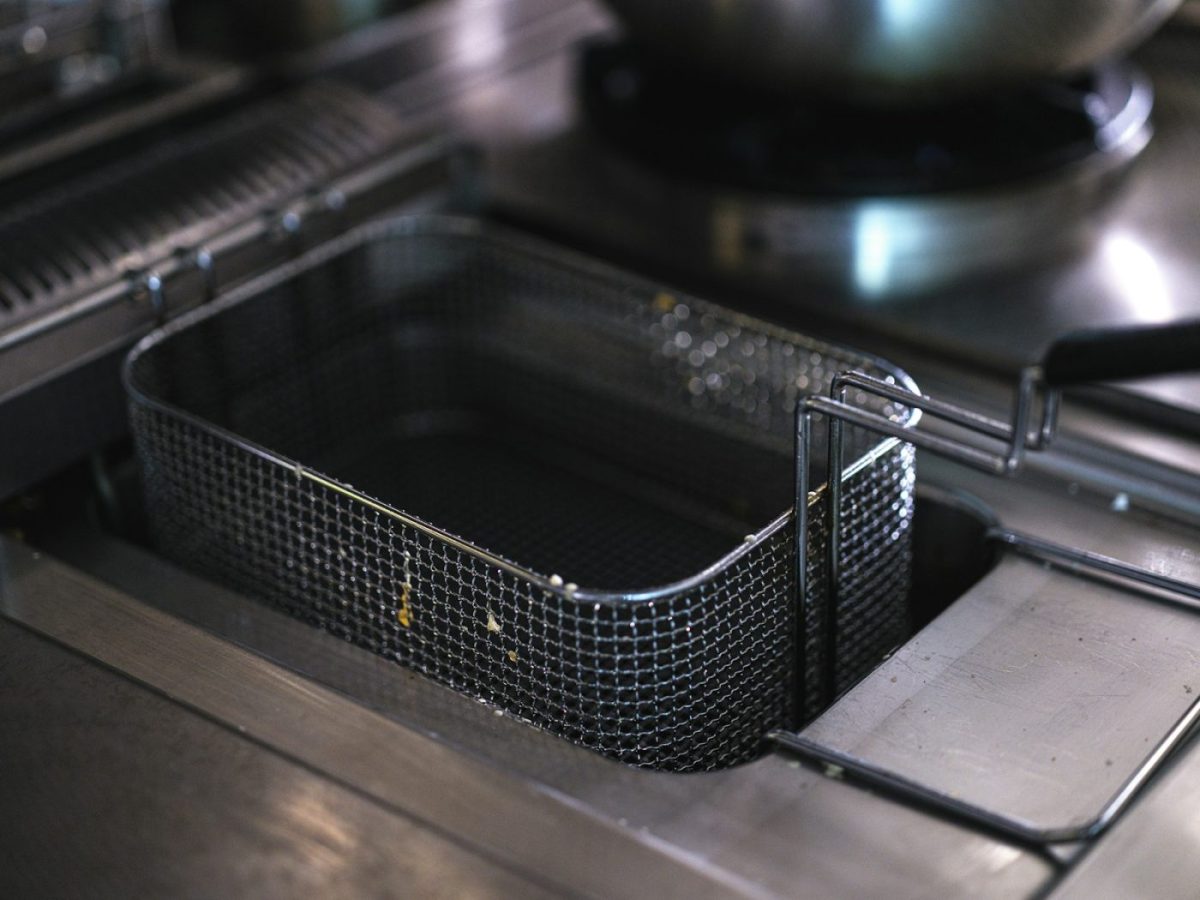
What decides how long fryer oil lasts?
Fryer oil life is counted in frying cycles and hours at temperature, not in days on the calendar. A vat held at 175°C for six hours a day ages far faster than the same oil used for two short services, even if both run a week. Most kitchens get 15-25 cycles from a fill before quality drops, and that range moves a lot with what you fry and how you run the fryer.
Five factors decide how fast a batch ages:
- Food type. Breaded and battered items shed crumbs that burn and darken oil quickly.
- Frying temperature. Every 10°C above what the food needs shortens oil life noticeably.
- Filtration. Daily filtering removes free fatty acids and carbon before they spread.
- Fryer load. Small batches keep temperature stable, overloaded baskets drop it and let oil soak into food.
- Oil grade. High-oleic oils tolerate heat longer than standard vegetable oil.
Which signs tell you the oil is spent?
Oil that has gone past its useful life shows it in the vat before it shows in the food. Check the fryer at the start of each shift and again when the lunch rush dies down. A single symptom is a warning. Two or more together mean the oil should come out.
- The oil darkens and turns cloudy, so you cannot see the basket through it.
- It foams heavily around the food and the foam lingers after the basket comes out.
- It smokes at normal frying temperature, around 175-180 °C, where fresh oil stays quiet.
- It smells sharp, acrid or fishy, and the smell carries into the finished dish.
- Portions come out greasy and soggy, the crust stays pale and the food drinks oil.
- A sticky, gummy film builds on the vat walls, the basket and the thermostat probe.
Any of these means the oil is breaking down and no amount of skimming will bring it back. Filter it once, test the result and replace the oil if the symptoms return within the same shift.
How do you filter oil between shifts?
Filter the oil at the end of every shift, not once a week. Let it cool to about 120 °C before you drain it, hot enough to flow freely but well below the flash point. Switch the fryer off and lock the power at the plug first, because a drained basin with live elements is a burn and fire hazard.
Drain through a fine filter paper or a portable filter machine, never a household sieve. While the basin is empty, scrape off carbon from the floor, the side walls and around the elements, then wipe it with a dry cloth. Water left in the basin will make the oil foam violently when you refill.
- Check the oil colour and smell before you decide to return it.
- Refill to the fill line, never above it.
- Write the date, the oil type and the shift in your fryer log.
When should you change oil rather than filter it?
Filter the oil every day, and change it when the signs of breakdown survive a full filter cycle. Cloudiness, a dark colour that no longer clears, or a persistent off smell after filtering mean the oil has reached the end of its usable life for your menu, and more filtering will not bring it back.
Change rather than filter in these cases:
- The oil foams heavily at 175-180 °C even after filtering and settling.
- Food comes out greasy, pale or soft at the usual time and temperature.
- A rancid or acrid smell stays in the vat after the oil has cooled and been filtered.
- Smoke appears well below the normal frying temperature.
- The oil has been through several filter cycles and still darkens within one shift.
For a busy kitchen, plan a full change on a set interval that matches your volume, such as weekly for heavy frying and every two to three weeks for lighter use, and let the signs above override the calendar. Never top up spent oil with fresh oil to stretch it. Record each change in the log so the next decision rests on data, not memory.
How does oil condition affect food safety?
Spent oil is a food safety problem before it becomes a flavor problem. As oil breaks down, it smokes at lower temperatures, so a fryer set to 175 °C starts burning instead of cooking. Burnt oil also leaves polar compounds and free fatty acids on the food surface, so food safety guidance treats heavy degradation as grounds for disposal.
You will see the signs in the vat before any test strip confirms them. Watch for persistent dark color, foam on the surface, a gummy residue on the fryer walls, and smoke below normal operating temperature. Any one of these means the oil is past filtering and needs changing.
Clean oil also protects the equipment. Degraded oil leaves carbon on heating elements and sensors, which slows recovery time and skews thermostat readings. A fryer run on fresh oil holds temperature more accurately and cooks food drier, because less broken oil soaks into the coating.
How do you keep a fryer oil log?
A fryer oil log is a single sheet taped to the wall by the station, filled in by whoever filters or tops up. Keep the columns short: date, shift, oil batch number, filtration time, top-ups and the reason for any change. One row per shift is enough, and a cook can fill it in under a minute.
Number each fresh batch when you fill the fryer, and write that number on every row until you dump it. The batch number turns a pile of rows into a pattern: you can see how many shifts a batch lasted, which menu days burned it fastest, and whether one fryer is consistently worse than the others.
- Date and shift, so you can match oil life to the day's menu.
- Oil batch number, from fill to dump.
- Filtration time and who did it.
- Top-up volume, even a rough ladle count.
- Reason for change: colour, smell, smoke, foam or scheduled swap.
Review the sheet weekly and plan orders from the average batch life, not from a hunch. If batches start lasting noticeably fewer shifts, check the thermostat and the filtration routine before you blame the oil.
FAQ
Can I top up old oil with fresh oil instead of changing it?
Yes. Topping up is normal between full changes, but it does not reset the oil's age. Fresh oil dilutes the breakdown products, so the fryer will perform better for a while. If the oil still foams, smokes or smells after a top-up, change it.
Does filtering really extend oil life?
Yes. Filtering removes food particles and crumbs that would otherwise keep cooking and accelerate breakdown. A daily filter after the shift, done at the right temperature, is the single most effective habit for getting more usable hours from each batch.
Is it safe to fry at a lower temperature to make oil last longer?
Frying below the recipe temperature makes food absorb more oil and can leave the centre undercooked. Keep to the temperature your menu specifies and rely on filtration and clean oil for quality, not on cutting heat.
