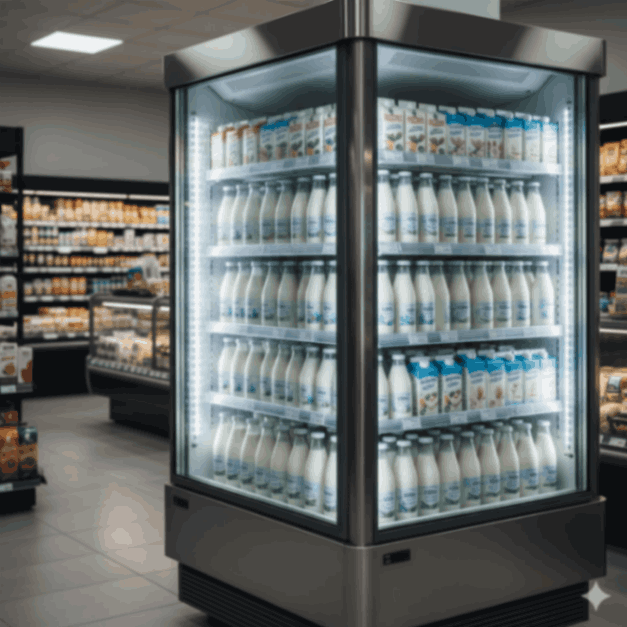
Milk reacts badly to heat. Even short exposure changes flavor, smell, and safety. I have seen cafés lose customers because milk sat in the wrong unit for a few hours. A dependable milk cooler prevents those issues by holding steady cold conditions from opening to closing time.
Temperature swings ruin milk faster than people expect. Regular fridges struggle once doors open often. A focused system avoids that stress. Good cooling protects quality, reduces waste, and keeps daily service smooth. Home users see the same benefits, just at a quieter pace.
People often underestimate storage. Milk storage decides freshness more than brand or carton date.
What Makes a Milk Cooler Different From a Standard Refrigerator?
A refrigerator for milk serves one task only. Standard fridges juggle leftovers, produce, and drinks. That mix causes uneven cooling and moisture problems. Milk coolers avoid that mess.
Commercial units push cold air evenly around containers. Shelves support cartons without blocking airflow. Doors shut tight and recover temperature fast after every opening.
Key differences stand out:
- Consistent cooling across all shelves
- Faster recovery during frequent access
How Do Milk Cooling Systems Keep Temperatures Stable?
Milk cooling systems rely on airflow and sensors that react instantly. Fans circulate cold air instead of letting it settle. Sensors track changes second by second.
The system cools without freezing. Frozen milk separates and tastes off. Stable cold slows bacterial growth while keeping texture intact.
Digital displays help staff check conditions at a glance. Manual guesswork fades out quickly.
What Is the Best Milk Cooler Temperature?
The ideal milk cooler temperature stays between 1°C and 4°C. This range also matches the best temperature for milk in refrigerator use at home.
Milk spoils faster above that line. Flavor drops first. Safety issues follow soon after.
This range supports:
- Slower bacterial activity
- Longer shelf life without texture damage
Why Choose a Stainless Steel Milk Cooler?
A stainless steel milk cooler handles daily cleaning without trouble. Steel resists stains, odors, and wear. Health inspectors trust it for good reason.
Plastic interiors scratch easily and trap residue. Steel stays smooth and easy to wipe. Cold reflects evenly across metal surfaces, which helps maintain steady storage.
Both cafés and home kitchens benefit from easier cleanup and longer service life.
When Does a Commercial Milk Cooler Make Sense?
A commercial milk cooler fits cafés, restaurants, and shops with steady milk flow. These units tolerate frequent door use without warming. A commercial refrigerator for milk also supports higher volume and longer run times.
Smaller homes rarely need that scale. Bulk storage or shared spaces may justify it.
How Do Milk Coolers Improve Daily Work?
Milk coolers remove doubt. Staff grab milk and move on. Drinks taste the same every time. Waste drops because milk lasts longer.
Reliable cold storage keeps service calm and customers satisfied. Once people rely on dedicated cooling, mixed-use storage feels like a step backward. Milk stays cold, fresh, and ready all day.
