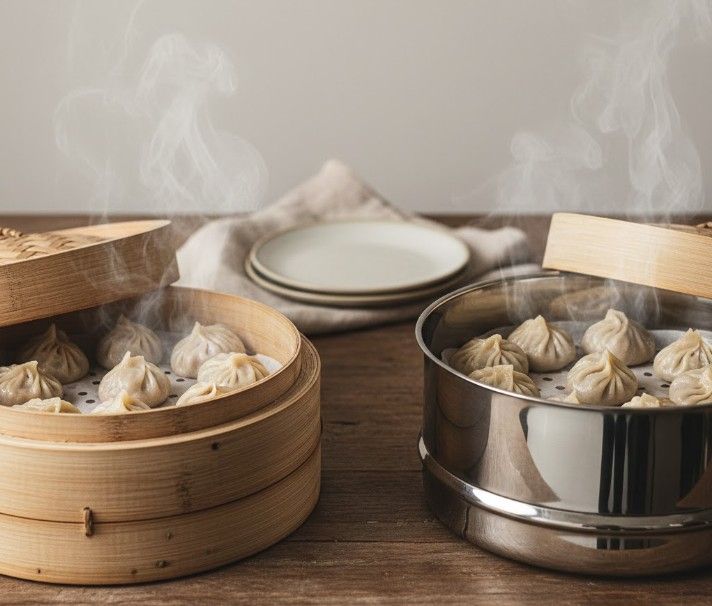
Selecting between a bamboo steamer and a stainless steel steamer frequently induces a minor existential crisis in your kitchen. You stand there pondering if you desire the rustic, ancestral charm of traditional timber or the cold, industrial reliability of metallurgical engineering. Both are essential pieces of kitchen equipment that serve the same fundamental objective, yet they produce gastronomic outcomes that feel remarkably disparate when you finally consume that inaugural morsel of a scorching bun.
Why do people argue about bamboo versus metal?
The grand divergence resides in how these materials regulate moisture and thermal energy during the vaporous cooking process. Bamboo functions as a natural, porous sponge that sequesters excess humidity away from your sustenance with surprising efficacy. This prevents those irritating aqueous droplets from descending and transforming your aerated buns into a lamentable, waterlogged disaster. A metal dim sum steamer, by contrast, establishes an intense, hermetically sealed thermal environment that operates with velocity but lacks that inherent hygroscopic regulation.
- Bamboo lids permit a minuscule quantity of vapor to escape, maintaining the internal barometric pressure at a steady, gentle level.
- Metallic surfaces are fundamentally non-porous, so condensation accumulates and descends unless you manually intervene with a cloth.
- Stainless steel persists for decades through sheer elemental stubbornness, while bamboo eventually succumbs to the ravages of brittleness.
Is a bamboo dumpling steamer better for dough?
Most epicureans reach for a bamboo basket steamer when manipulating delicate wrappers that possess the structural fragility of fine parchment. The woven foundation and lid offer a temperate heat that avoids traumatizing the dough or causing the epidermis of the dumpling to rupture. Utilizing a bamboo dumpling steamer ensures you obtain that quintessential ligneous fragrance that evokes the bustling atmosphere of a traditional Cantonese tea house. It feels intellectually appropriate, and it prevents the lower surfaces of your appetizers from adhering too aggressively to the vessel.
Why pick a stainless steel steamer instead?
If you prioritize expeditious preparation and clinical hygiene, a dumpling steamer stainless steel model triumphs over its wooden counterpart every time. You can simply consign the entire assembly to the dishwasher without fretting over the clandestine growth of fungi or the warping of the frame. It manages high-temperature assignments like vaporizing whole fish or fibrous root vegetables with a structural fortitude that grass simply cannot replicate. Furthermore, it refuses to retain the olfactory ghosts of last night’s pungent garlic prawns or other aromatic ingredients.
- Metallic units stack with architectural precision and secure themselves with a level of stability that timber cannot match.
- You can employ steel on modern induction cooktops without requiring the mediation of a separate, water-filled saucepan or adapter.
What is the best steamer for dim sum at home?
The ultimate decision regarding the best steamer for dim sum hinges on the magnitude of effort you wish to dedicate to equipment maintenance. If you relish the meditative ritual of manual cleansing and meticulous air-drying of your apparatus, then the bamboo option is your destiny. For the harried cook who merely desires a reliable instrument that restores its pristine state in seconds, the metal dim sum steamer is the pragmatic choice. Many sophisticated kitchens retain both versions because certain evenings demand historical authenticity while others require the cold speed of modernization.
Can a metal dim sum steamer handle buns?
You can absolutely attain magnificent results with a metallic unit if you employ a rudimentary kitchen stratagem to bypass its limitations. Envelop the lid in a sterile tea towel to intercept the ascending vapor before it undergoes a phase change back into liquid. This minor modification grants your steel assembly the metaphorical breathability that is naturally found in the fibers of a wooden lid. Regardless of the material you inhabit, always intercalate a layer of perforated parchment paper so your culinary creation remains structurally sound when retrieved.
