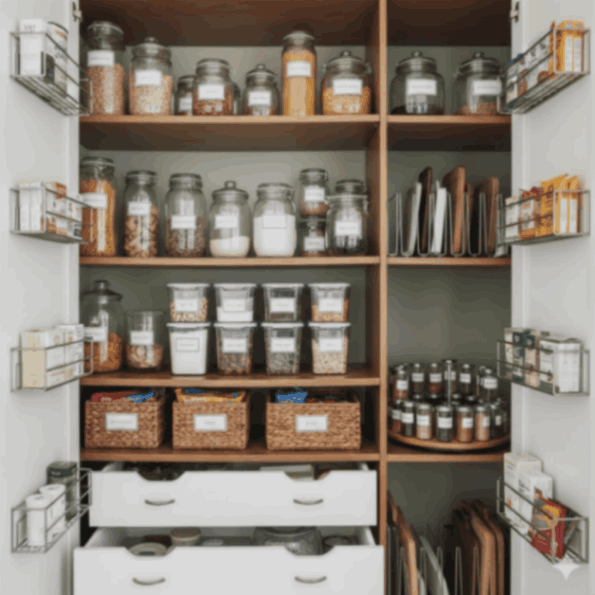
A messy pantry can turn simple cooking into a scavenger hunt. Ingredients get lost, snacks hide behind cans, and expired items accumulate silently. Sorting it out is more than tidying; it’s about creating an area that actually makes sense and saves time. Proper organization means reaching for what you need without pulling everything out or juggling jars precariously.
Why Organizing Your Pantry Matters
A well-kept pantry in your kitchen streamlines meal prep and reduces stress. You can easily see what you have, avoid waste, and stop buying duplicates. A clear pantry also encourages healthier habits: spotting fresh ingredients at a glance makes cooking more likely than reaching for convenience foods. Small adjustments, like arranging staples within easy reach or grouping similar items together, create a noticeable difference in daily life.
- Categorize by type: grains, canned goods, snacks, spices.
- Keep frequently used items at eye level.
- Rotate stock so older items are used first.
Even small pantries benefit from a structured approach; a few bins or shelf dividers can create the illusion of more space.
Organizing a Small Kitchen Pantry
Small pantries require creative thinking. Space is limited, but every inch counts. Start with a simple system: group items by purpose or type. Use stackable containers to store dry goods and make items visible at a glance.
- Door racks store spices or packets efficiently.
- Clear jars help identify contents quickly.
- Baskets contain smaller items, preventing clutter.
Adjustments can be subtle; a small lazy Susan or pull-out bin can save frustration when reaching for ingredients at the back.
Organizing a Deep Kitchen Pantry
Deep pantries often turn into catch-alls for forgotten cans or boxes. Pull-out drawers or sliding baskets help keep everything accessible. Label containers to prevent confusion and group items by meal type for faster prep.
- Use vertical dividers for cutting boards, baking sheets, or trays.
- Keep heavy items low to prevent accidents.
- Consider corner turntables for items that tend to hide.
Small tweaks make the pantry more functional without a total remodel.
Organizing a Pantry Closet
Closet-style pantries provide more room but demand strategy. Think in zones: daily essentials at chest height, rarely used items up top, and heavy or bulky items below. Stackable containers maximize shelf space and labels maintain order.
- Zone items by frequency of use.
- Use containers to prevent spills and toppled boxes.
- Keep bulk items grouped together for easier handling.
Consistency matters: once the system is set, maintaining it is much easier than constantly reshuffling.
Quick Tips for Any Pantry
Whether tiny, deep, or closet-like, certain practices improve efficiency:
- Group similar items together.
- Keep frequently used ingredients accessible.
- Rotate stock to reduce spoilage.
For those who want extra control, color-coded bins or a simple inventory list can help. Beginners should start with one shelf or drawer; tackling the entire pantry at once can feel overwhelming.
Organizing your pantry is not just about order; it’s about making your kitchen genuinely functional. A little attention transforms a chaotic space into one that’s easy to work in, reduces stress, and makes cooking more enjoyable.
