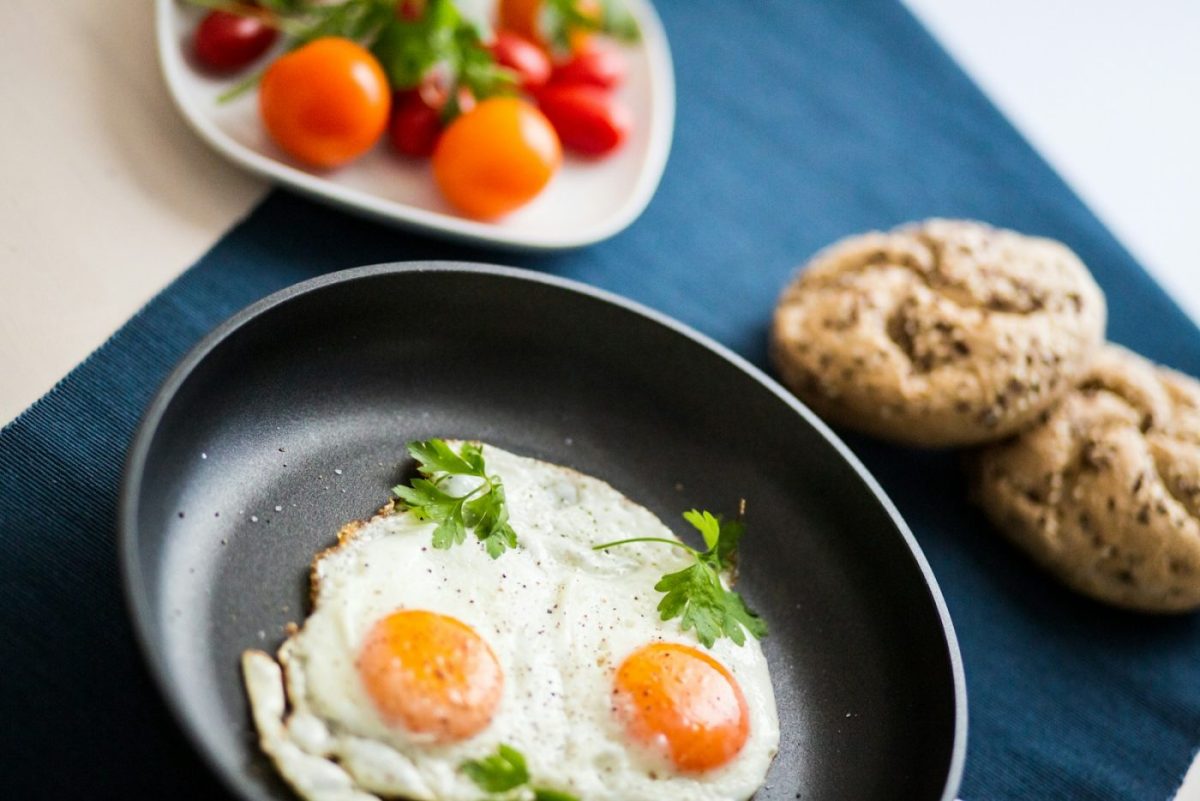
What makes a non-stick pan non-stick
A non-stick pan has a coating that stops food bonding to the metal. The three main coating types in commercial kitchens are PTFE-based, ceramic, and hard-anodized.
PTFE (polytetrafluoroethylene) is a synthetic fluoropolymer applied in layers over aluminum or stainless steel. It creates an extremely low-friction surface where almost nothing sticks. In professional kitchens, PTFE pans dominate because they release food reliably under high-volume use and require less oil.
Ceramic coatings are silica-based, derived from sand, and cured onto the pan without fluoropolymers. They withstand higher temperatures than PTFE but lose their non-stick properties faster under daily kitchen abuse. Hard-anodized pans are aluminum that has been electrochemically treated to form a thick oxide layer; the surface itself is not non-stick unless sealed with a PTFE or ceramic topcoat, but the hardened base resists warping and scratching better than raw aluminum.
- PTFE coatings use a slick synthetic polymer for consistent food release.
- Ceramic coatings are silica-derived and free of fluorinated compounds.
- Hard-anodized aluminum forms a tough oxide base that often carries a non-stick top layer.
- PTFE remains the standard in most restaurant and catering kitchens.
Does PTFE release harmful fumes at high heat
PTFE coatings begin to degrade when the pan reaches roughly 260 °C (500 °F). At that point the polymer starts to release fumes that can cause flu-like symptoms in humans, a condition called polymer fume fever. The fumes clear quickly once you remove the heat source.
A busy line cook rarely hits that temperature under normal use. Butter smokes around 175 °C, most frying oils smoke between 200 °C and 230 °C, and searing a steak on a flat-top runs at 230 °C to 250 °C. You have to leave a dry pan on a high flame for several minutes to cross the 260 °C threshold. In a professional kitchen with constant movement the pan is rarely empty and unattended.
The real risk is a forgotten pan on a gas burner, not routine saute work. An exhaust hood over the range pulls away any stray vapour. As long as you cook with food or fat in the pan and avoid preheating it empty on full blast, PTFE stays well below its breakdown point.
How PFOA and PFAS relate to non-stick safety
PFOA, or perfluorooctanoic acid, was a processing aid used to manufacture PTFE non-stick coatings, not an ingredient in the finished pan surface. Major manufacturers eliminated PFOA from production by 2015 under a voluntary industry stewardship program, and the FDA’s 2011-2016 testing confirmed that food-contact coatings no longer contained detectable levels of the substance. A pan bought today from a reputable supplier does not expose you to PFOA during cooking.
PFAS is a broad family of thousands of synthetic chemicals that includes PTFE. The solid, polymerized PTFE that forms the non-stick layer is inert and too large to be absorbed by the body if ingested in small flakes. Current regulatory attention focuses on shorter-chain PFAS compounds used in some coating formulations. The European Food Safety Authority and the FDA both maintain that PTFE-based non-stick coatings, when manufactured without PFOA and used within their rated temperature limits, meet safety standards for food contact.
This distinction matters in a commercial kitchen. A pan labeled “PFOA-free” addresses the historical concern but tells you nothing about the coating’s durability or its maximum working temperature. Check the manufacturer’s specification sheet for the coating type and the stated heat limit. That number, not the absence of a phased-out processing chemical, is what determines safe use on a high-output line.
Ceramic vs. Traditional Non-Stick: Which Is Safer?
Ceramic non-stick coatings are made from a silica-based sol-gel, which is essentially a hardened layer of sand-derived material. They contain no PTFE or PFAS chemicals, so they do not emit the fumes associated with overheating a traditional pan. You cannot overheat a ceramic pan to the point of releasing a toxic gas, because the coating has no fluorinated compounds to break down.
The trade-off is service life. A ceramic coating is more brittle than PTFE and loses its release properties faster, often within 1-2 years of daily use in a commercial kitchen. A PTFE pan, used within its safe temperature range below 260°C (500°F), will outlast a ceramic pan by a factor of two or three. A worn ceramic surface is no more dangerous than a worn PTFE surface: both become harder to clean and can harbor food residue.
- Ceramic coatings contain no PTFE or PFOA, eliminating fume risk at any temperature.
- PTFE coatings are chemically inert and safe when kept below 260°C (500°F).
- Ceramic pans lose non-stick performance 2-3 times faster than PTFE pans.
- A degrading ceramic surface becomes porous and traps food, requiring more oil to cook.
- PTFE pans offer a longer working life, which means fewer replacements and less waste.
- Neither coating poses an ingestion hazard if small particles flake off, as both pass through the body unchanged.
When a scratched non-stick pan becomes a health concern
A scratched non-stick surface does not turn your pan into a toxic hazard overnight. The coating particles that might flake off into food are chemically inert. Your body passes them through without absorbing them, so a few small scratches do not pose a direct poisoning risk.
The real problem is loss of function. Once the coating is scored through to the metal underneath, food sticks and burns. That burnt residue creates compounds that are a genuine health concern, and the exposed aluminum or steel base can react with acidic ingredients, giving food a metallic taste.
Replace the pan when the cooking surface shows deep scratches you can feel with a fingernail, or when the coating begins to peel at the edges. A pan with visible base metal is no longer a non-stick pan. It is a worn tool that makes you use more oil and scrub harder, and that is the point where you retire it.
How to choose a non-stick pan that lasts and stays safe
A pan that stays safe for years starts with physical signs of solid construction, not brand claims. Pick up the pan and feel its weight. A heavy, thick base, typically 3.5 mm or more, resists warping and spreads heat evenly so the coating does not overheat in spots.
Check the handle attachment. Cast stainless steel rivets hold better than spot welds or screws that loosen with daily use. The base material matters. Anodized aluminum or stainless steel clad pans keep their shape under high heat, which protects the non-stick layer from cracking.
Daily habits in a commercial kitchen extend the safe life of any coating:
- Preheat the pan with oil or food inside. A dry empty pan hits 260 °C (500 °F) in under two minutes on a gas burner.
- Use silicone or wood tools. Metal spatulas and tongs create micro-scratches that widen with each wash cycle.
- Wash by hand with a soft sponge and mild detergent. Commercial dishwashers combine high heat, strong alkali and water jets that degrade the coating bond.
- Stack pans with a cloth or paper liner between them. Bare metal on coated metal wears through the surface in weeks.
- Retire the pan when the cooking surface feels rough to the touch or bare metal shows through. A worn coating can no longer be cleaned reliably.
FAQ
Is ceramic cookware completely free of chemicals?
Ceramic coatings are derived from a silica-based sol-gel process and do not contain PTFE or PFAS. They are inert up to about 450 °C, well above normal cooking temperatures. The trade-off is that the release properties wear faster than PTFE, so pans need replacing sooner.
Can a non-stick pan cause flu-like symptoms?
Polymer fume fever is a temporary condition caused by inhaling fumes from PTFE heated above 260 °C. A commercial kitchen rarely sustains that temperature on a flattop unless a dry pan is left on high heat. Proper ventilation and not preheating an empty pan eliminate the risk.
What is the safest non-stick cookware for a professional kitchen?
A heavy-gauge hard-anodized aluminum pan with a reinforced PTFE coating offers the best balance of durability, even heating, and chemical stability for daily use. Look for pans rated for at least 5,000 abrasion cycles and a maximum service temperature printed on the base.
How often should a commercial kitchen replace non-stick pans?
Replace any non-stick pan as soon as the coating shows visible scratches, peeling, or a dull, worn center. In a high-volume kitchen this typically means every 12 to 18 months, depending on the utensil policy and cleaning method.
