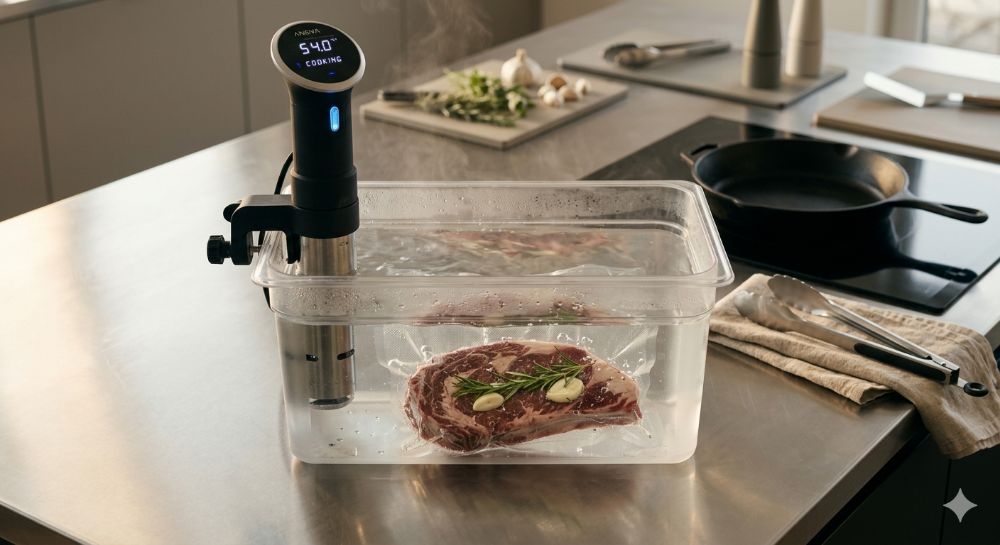
A sous vide machine is a precision kitchen tool that cooks food in a temperature-controlled water bath. This method ensures that the food reaches an exact internal temperature without the risk of overcooking the exterior.
To use a sous vide machine, secure the device to a water-filled pot, set your target temperature, and place vacuum-sealed food into the bath. The machine circulates the water to maintain heat consistency within 0.1°C, guaranteeing edge-to-edge perfection. Most meats require 1 to 4 hours of immersion depending on thickness.
What is a sous vide machine?
A sous vide machine, specifically an immersion circulator, is a device that heats and moves water to cook food sealed in bags. Unlike traditional ovens where air temperature fluctuates, this tool maintains a constant thermal environment.
In 2026, modern sous vide machines have become essential for home chefs seeking restaurant-quality results. By using precise sensors, the machine sous vide eliminates guesswork, allowing a steak to stay at exactly 54.4°C (medium-rare) for hours without turning grey or dry. Understanding how heat recovery ventilation systems work can help you appreciate the importance of controlled environments in modern technology.
How to use a sous vide machine?
Using a sous vide machine involves three primary steps: seasoning and sealing the food, heating the water, and finishing with a sear. It is a set-it-and-forget-it process that prioritizes precision over constant supervision.
- Preparation: Place your ingredients (e.g., salmon with lemon and herbs) into a food-grade silicone or vacuum bag. You can learn more about external vs chamber vacuum sealers to choose the right sealing method.
- Water Bath: Attach the machine sous vide to a deep container filled with water. Set the interface to your desired temperature.
- Cooking: Once the water reaches the target, drop the bag in. A typical 250g steak takes approximately 60 minutes at 54°C.
- The Sear: Remove the food and pat it dry. Flash-fry it in a hot pan for 30 seconds per side to create a Maillard crust.
| Food Item | Temperature (°C) | Time (Approx.) |
| Beef Steak | 54°C | 1–3 Hours |
| Chicken Breast | 63.5°C | 1.5–2 Hours |
| Salmon Fillet | 50°C | 45 Minutes |
| Root Vegetables | 84°C | 1–2 Hours |
Why choose sous vide over traditional frying?
The primary benefit is consistency and moisture retention. Traditional high-heat methods often result in a 20% loss of product weight due to evaporation and tightening muscle fibers; sous vide reduces this loss to less than 5%. However, if you prefer traditional methods, checking the air fryer vs deep fryer comparison can help you decide.
Consider a 2026 case study involving high-volume catering: by switching to a sous vide machine for chicken prep, a local bistro reduced food waste by 15% because the meat never became “rubbery” from sitting under heat lamps. The precision of the machine sous vide ensures every serving is identical to the first. For a complete list of essential gear, see our restaurant kitchen equipment guide.
FAQ:
Is it safe to cook in plastic bags?
Yes, provided you use BPA-free, food-grade polyethylene or silicone bags designed for high temperatures.
Do I need a vacuum sealer for a sous vide machine?
No, you can use the “water displacement method” with standard freezer bags by slowly lowering the open bag into water to force the air out before sealing.
Can I overcook food in a machine sous vide?
While you cannot exceed the set temperature, leaving food in for excessive periods (e.g., 10+ hours for a steak) can eventually break down the texture, making it too soft.
Conclusion
Investing in a sous vide machine is the fastest way to improve your culinary output. By focusing on temperature rather than time, you achieve professional results with minimal effort. Whether you are preparing a delicate fish or a tough cut of brisket, the machine sous vide provides the control needed for 2026’s modern kitchen standards.
