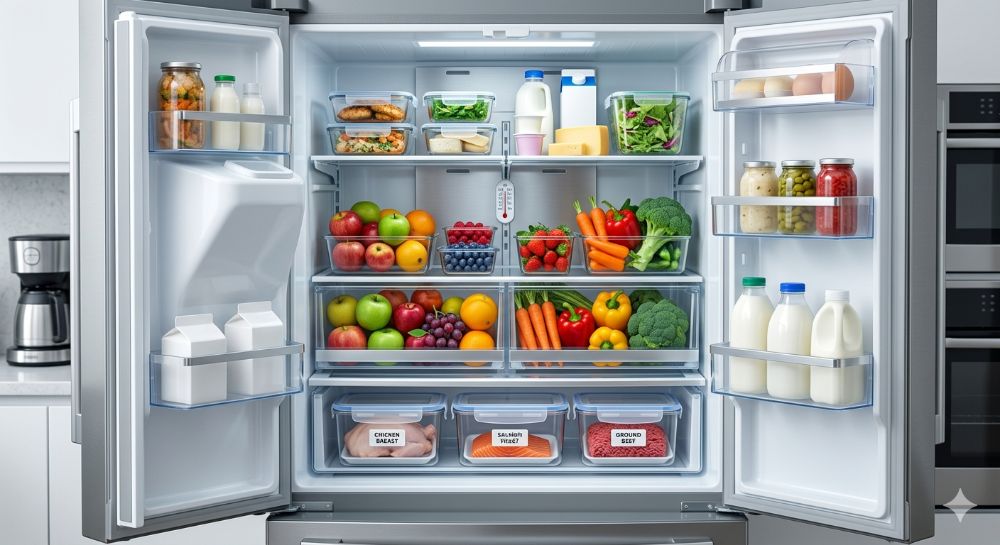
The correct refrigerator storage order places raw meat on the bottom shelf, produce on middle shelves, and ready-to-eat foods on top. This layout prevents cross-contamination – the transfer of harmful bacteria from raw foods to items that won’t be cooked. According to the FDA Food Safety Guidelines, bacteria such as Salmonella, E. coli, and Listeria can survive on raw meat and poultry. When raw foods are stored above other items, bacterial juices drip downward and contaminate foods below.
Proper Food Placement in Refrigerator
→ Bottom shelf: Raw meat, poultry, fish (sealed containers)
→ Middle shelves: Produce, vegetables, fruits
→ Top shelf: Cooked foods, leftovers, dairy
→ Door: Non-perishables, condiments, butter
→ Temperature: 40°F (4°C) or below
What Is the Correct Order for Storing Food in a Refrigerator?
The proper food placement in refrigerators follows a hierarchy based on safety principles established by the FDA and HACCP (Hazard Analysis and Critical Control Points). The bottom shelf is coldest because cold air sinks – making it the safest location for raw proteins requiring careful temperature control.
Storage hierarchy:
The top shelf (35–38°F) holds ready-to-eat foods, cooked leftovers, and dairy. These foods won’t be cooked again, so they must stay free from raw bacteria. Middle shelves (38–40°F) store vegetables, fruits, and condiments – positioned above raw foods for safety. The bottom shelf (32–38°F) is reserved exclusively for raw meat, poultry, and fish in sealed containers. The door (50–55°F) is the warmest zone with temperature fluctuations; use it only for non-perishables.
The FDA identifies cross-contamination as a major cause of foodborne illness. Understanding food safety best practices for your restaurant kitchen helps maintain proper food handling standards.
Why Does Shelf Position Matter for Food Safety?
Shelf position affects food safety through gravity and temperature zones. Raw meat contains bacteria invisible to the naked eye. When stored above ready-to-eat foods, any dripping carries bacteria downward. If contaminated food is consumed without cooking, the bacteria survives and causes illness.
Temperature control: The FDA recommends keeping your refrigerator at 40°F (4°C) or below. At this temperature, bacterial growth slows significantly. Above 40°F, bacteria multiply rapidly. You can verify the temperature using an inexpensive thermometer – place it on the middle shelf and check after 12 hours.
For commercial operations, how to choose the right commercial refrigerator for your kitchen provides detailed selection guidance.
Where Should Raw Meat Go in the Fridge?
Always place raw meat on the bottom shelf – never anywhere else.
Raw meat requires three conditions: bottom shelf position (coldest), sealed leak-proof containers, and 32–38°F temperature. Storage time limits from the FDA:
- Poultry: 1–2 days maximum
- Fish: 1–2 days maximum
- Ground meat: 1–2 days maximum
- Whole cuts: 3–5 days maximum
Use sealed plastic containers with tight lids, deep trays at least 2 inches high, or vacuum-sealed bags placed in containers. Never use shallow plates or open containers – drips will escape.
Can You Store Different Foods Together?
No. Different food types must be separated by shelf level, not simply grouped together.
Safe combinations include cooked chicken with cooked beef, lettuce with tomatoes, and butter with cheese. Unsafe combinations include raw chicken with lettuce, raw fish with cooked salmon, and ground beef with deli meat.
If space is limited, use sealed containers as physical barriers on the bottom shelf. Cross-contamination has occurred when – ways to prevent foodborne illness provides detailed prevention strategies.
Weekly Maintenance Schedule
Check your refrigerator weekly:
- Verify expiration dates
- Remove spoiled foods (discoloration, odor, mold)
- Wipe shelves and remove spills
- Confirm raw meat stays on bottom shelf
- Check temperature remains at 40°F or below
For professional cleaning standards, the ultimate guide on how to clean a commercial refrigerator applies to home units as well.
Key Takeaway
Proper food placement in the refrigerator is the simplest and most effective way to prevent foodborne illness. Raw meat on bottom, cooked foods on top – this gravity-based system works because bacteria cannot travel upward.
